
By Marina / May 26, 2026
Disclosure: This post may contain affiliate links. As an Amazon Associate I earn from qualifying purchases. I may receive a small commission, at no additional cost to you.
“Before you read this, the important part: I’m 21. I’m not a dermatologist, an endocrinologist, a nutritionist, or any kind of medical professional. Nothing in this post is medical advice, and your hormones, your cycle, and your skin are nothing I have any business diagnosing. If your acne is persistent, your cycle is irregular, or something feels off in your body — please see a real doctor. I went to one too. This post is my personal story and the changes I made for myself, in parallel with that. Read it as a journal entry, not a prescription.”
About six months ago, I started getting more breakouts than I was used to. Nothing dramatic — just stubborn little pimples that wouldn’t quite quit. I was 20 turning 21, and what actually caught my attention wasn’t the breakouts themselves; it was the timing. They worsened in the week before my period, every cycle, alongside bloating, cramps that felt like the first day of my cycle even though it was still seven days away, and a period that turned heavier, longer, and — for the first time in my life — late.
I want to be careful here, because that last part was actually what made me pay attention. My skin I could (almost) live with. But I’d had a clockwork cycle for years. When it started drifting, I knew something underneath it was changing. The acne wasn’t the problem. The acne was the messenger.
This is what I learned in the months after.
My skin was tracking my cycle, and I didn’t notice for a long time
I want to say I figured it out instantly, but I didn’t. For weeks I treated each breakout like a separate event. Maybe I changed my pillowcase too late. Maybe it’s that new moisturizer. Maybe my hand kept touching my face. It took me a while — and a lot of journaling — to see that the flare-ups weren’t random. They were arriving on the same day of my cycle, every cycle. The week before my period.
Once I saw it, I couldn’t unsee it. My cheeks were a calendar.
I’d love to tell you there was a dramatic moment of insight. There wasn’t. It was just the slow accumulation of evidence: this is the second cycle in a row. This is the third. By month four, I’d written enough of it down to stop pretending the pattern was a coincidence.
A note on location, because I had to learn this too. A lot of skincare content online treats jawline-and-chin breakouts as “hormonal” and cheek breakouts as something else — congestion, gut, friction. Mine were on my cheeks. That confused me for a while. What I’ve since read is that the picture isn’t as clean as the internet makes it sound — hormonal patterns can show up in different places for different bodies. So if your acne doesn’t look like the textbook map, don’t dismiss the hormone question.
The moment that sent me down the research rabbit hole
I want to share one moment, and then I’ll move on, because the details aren’t mine to share — they’re my grandmother’s. Around the time my skin was at its most stubborn, I went with her to a clinic for a follow-up after she’d had surgery for a women’s-health condition. She was 70.
What I’ll never forget is the waiting room. It was full. And it was full of women in their twenties and thirties.
My grandmother was the only older woman there.
I sat in that room and felt my brain catch on something. Why are women my age here? Why are reproductive issues, hormonal issues, things I’d thought of as “older women problems” suddenly showing up everywhere in my peer group? That was the question that opened every door for me. I started reading. Not skincare anymore — bigger than that. Endocrine disruptors. Gut health. Environmental load. The way the world has changed for women’s bodies in just a couple of generations.
I’m not going to make a single claim about what caused my grandmother’s condition. That’s not something I or anyone reading this can know. What I can tell you is that the waiting room cracked open a curiosity I haven’t put back down since.
What I actually changed (none of it was skincare first)
Here’s the thing that surprised me most about clearing my skin: skincare was the smallest part of it. The things that moved the needle for me were almost entirely off the bathroom shelf.
Sleep, first. I gave my sleep more attention than I’d ever given it before — not just hours, but the kind. Phone out of the room. Earlier wind-down. Real darkness. I have nothing original to say about cortisol that you can’t read elsewhere, but the short version of what I learned is that the body produces stress hormones along a 24-hour rhythm, and when sleep is bad, that rhythm gets noisy. When the stress system is noisy, skin pays. I noticed the difference in my face within the first two weeks. That was the fastest visible change of anything I tried.
Sugar, second. I didn’t go zero — I went much less. I cut most of the refined sugar I was eating, especially the snack-and-coffee kind that I’d been treating as personality. I’m not making any health claim about sugar here. What I’ll say is: my breakouts got less aggressive when I stopped feeding the cycle with sugar crashes. That’s an observation, not a theory.
Plastic, third — and this one will sound a little crazy. Once I started reading about endocrine disruptors, I couldn’t unsee how much plastic was touching my body all day. Water bottles. Plastic straws. The bristles of my toothbrush. Even the synthetic fibers in clothes — including the kind closest to skin. I’m not telling you that plastic gave me acne. I’m telling you that when I started swapping the ones I could swap — glass and stainless instead of plastic for water, a wooden toothbrush, cotton instead of polyester for the layers closest to me — I felt better. Whether it was the swap itself or the awareness or both, I won’t pretend to know. But it’s part of the story, and skipping it would be dishonest.
Movement, fourth. I started moving with my cycle instead of against it. Heavier work and longer walks in the first half of the month, when I had more in the tank. Gentler movement in the week before my period, when I clearly didn’t. This wasn’t a workout plan I copied from anywhere; it was just listening to what my body kept telling me and finally responding.
More natural cosmetics, last. Last, on purpose — because if you only change your skincare and not the other four things, in my experience, you’re playing on the smallest lever you have. I shortened my routine. I leaned toward fragrance-free and barrier-friendly. I stopped chasing actives that promised fast fixes.
Timeline check, since I know that’s what people want to know: I saw my skin start to settle within the first two weeks of these changes. The hormonal shifts — cycle returning to regular, the PMS easing, the breakouts easing — those took two to three months. Honest pace.
On seed cycling — what I read, and why I haven’t tried it
I want to flag this one carefully because it gets passed around online like it’s basic biology. I haven’t tried seed cycling. What I’ve done is read about it.
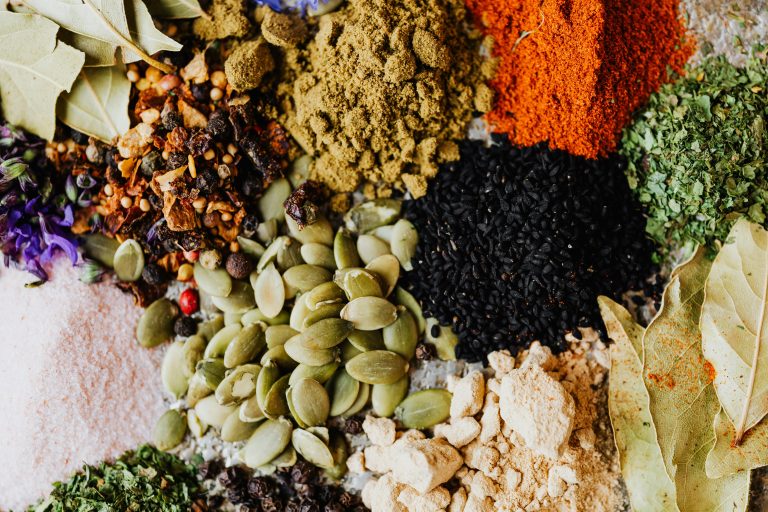
The short version, for anyone who hasn’t met the idea: it’s a practice of eating specific seeds in specific phases of your cycle — pumpkin and flax in the follicular phase, sunflower and sesame in the luteal phase — based on the claim that these seeds support estrogen and progesterone production at the times of the cycle when each is meant to rise.
What I’ve found in reading is that the scientific evidence is, at best, very early — much more anecdotal than rigorous. Some women swear by it. The studies I could find are tiny, often not focused on the same outcomes people are using it for. That doesn’t mean it doesn’t help; it means it hasn’t been clearly shown to help in the way the wellness internet describes.
So why am I writing about something I haven’t tried? Because it’s part of the honest map of what’s out there, and pretending I haven’t researched it would be silly. If I ever try it, I’ll write about that too. For now, I treat it as an interesting hypothesis I haven’t tested on myself.
The cortisol-skin connection in plain words
The piece I want to keep simplest is this one. Stress and skin are not in separate rooms in your body. They’re talking constantly. You’ve heard the saying “beauty comes from within” — it turns out it’s true.
When the body is under sustained stress — bad sleep, low blood sugar, chronic worry, too much pushing — it leans on cortisol. Cortisol is useful in bursts. In long, low-level streams, it stops being useful and starts changing other systems, including ones connected to inflammation, oil production, and the immune response in skin. I’m not going to pretend I can draw the full diagram. What I can say is that every single time I’ve been at peak stress in my life, my face has shown me first. That’s not coincidence; that’s communication.
This is the piece I’d protect the most if someone said what’s the one thing. It’s not a serum. It’s sleep, slower mornings, fewer commitments in the week before my period, and the boring discipline of not borrowing tomorrow’s energy.
What I’d tell the 20-year-old version of me
One: when your cycle changes, don’t normalize it. Going on the pill to fix it is a conversation you should have with a doctor, not a TikTok. Ignoring it is also a conversation you’ll have with your body later, on harder terms. Get bloodwork. Ask questions. Be the woman in the waiting room who came early.
Two: your skin is not betraying you. It’s reporting on you. The acne wasn’t the enemy — it was the only language my body had that I was finally willing to listen to.
If you want the gentle picks I leaned on
If you want the short list of barrier-friendly, fragrance-free skincare picks I used while my skin was settling — the same ones I’d reach for again, and again — they’re inside my free Skin Barrier Recovery Cheat Sheet. It’s where I keep all of this in one place.
“One last time, because it matters: I’m 21, I’m not a doctor, and everyone’s body is its own country. If your skin won’t calm, your cycle is irregular, or something feels off — see a real one. This is just my story, written down as honestly as I know how.”