
By Marina / May 17, 2026
Disclosure: This post may contain affiliate links. As an Amazon Associate I earn from qualifying purchases. I may receive a small commission, at no additional cost to you. Full details on my Disclaimer page.
I was paying $50 for Korean cream that wasn’t working. Then I tried a $14 jar of tallow… The first time I saw someone smearing beef tallow on their face, I was scrolling Instagram. It was an ad. I remember thinking two things at the same time: “that sounds disgusting” and “but it’s only two ingredients, so at least there’s no way it’s toxic.”
At the time, I was just coming out of six months of a K-beauty experiment that fixed nothing and made things noticeably worse. (I wrote the whole story here — short version: 12 products, $400, and skin that looked worse every month.) My face had clogged pores, painful bumps under the surface that wouldn’t come up, and that paradoxical dry-and-shiny combination that means your barrier isn’t doing its job. I was tired. Tired enough that curiosity won — and right when I was telling myself “I want something natural with a clean ingredient list,” the ad showed up.
This is the summary of 60 days later. No exaggeration. Just what happened.
Why tallow is everywhere right now
Tallow — rendered, filtered beef fat — has been used for skin care for thousands of years. It isn’t a new beauty trend; it’s an old one that came back after decades of complicated 12-step routines.
What happened in the last 2–3 years is specific: the clean beauty movement started pushing back against ingredient overload, ancestral wellness culture took off on TikTok, and people on social media started posting before / after comparisons using a single 2-ingredient product. When one product with two ingredients does what twelve products couldn’t, people notice.
What’s actually in it
Tallow has a fatty acid profile that’s remarkably close to the natural sebum of human skin. Roughly: palmitic, oleic, stearic, and palmitoleic acid — the last one is especially interesting, because it’s naturally present in our skin and its levels drop with age.
That isn’t a magic guarantee it will work for everyone. It’s the biochemical reason a lot of people who use tallow report that their skin “recognizes” it — no adjustment period, no flare-ups, just absorption.
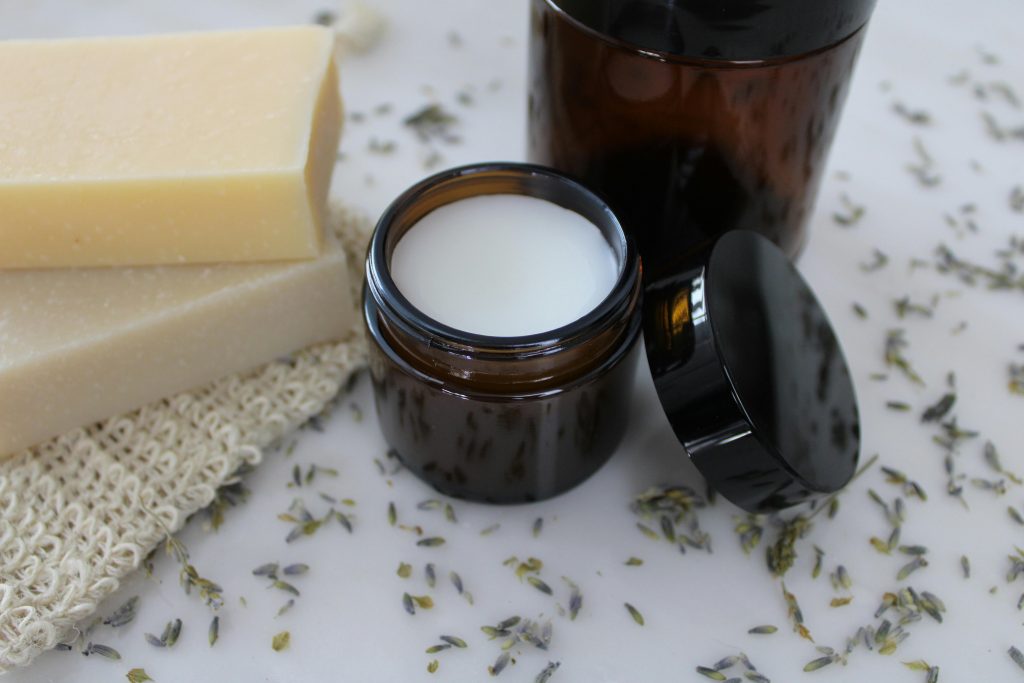
The one I use — Cowlo Whipped Beef Tallow Balm (Unscented) — has exactly two ingredients on the label: grass-fed beef tallow and organic olive oil. That’s it. What pushed me toward this one over the other options was the transparency of the ingredient list and the “safe for babies” line in the description. When a product is considered safe enough for a baby’s skin, my personal toxicity check is automatically covered.
How I tested it: day 0 to day 60
I started after I’d cut all the active products — no retinoids, no acids, no vitamin C formulas. That part mattered. The tallow wasn’t being tested on top of a complicated routine — it was being tested as my only moisturizer.
The routine was brutally simple:
- Morning: lukewarm water (no cleanser), tallow on damp skin, mineral SPF.
- Evening: a gentle cleansing oil, tallow on damp skin.
Amount: one pea-sized dab per side of the face. That’s it. Twice a day.
The first thing that surprised me was the lack of smell. I was expecting something heavy, maybe even an animal note. A good tallow formula has to be filtered and purified to the point that it doesn’t smell of anything. If you want a scent, there are versions made with honey or lavender — but for sensitive skin, I’d stick with unscented.
The second thing that surprised me: it absorbed instantly. No sticky layer. No greasy after-feel. No “I have to wait 10 minutes before makeup.” You can even use it as a primer — I’ve put powder on right after the tallow and had no pilling, no weird reaction.
What happened, week by week
Week 1. The first visible change was hydration. My face was softer to the touch. Less of that tight feeling after cleansing. The paradoxical dry-and-oily sensation started to fade — the exact thing K-beauty products kept promising and couldn’t deliver.
Week 2. The bumps under the skin started clearing. Not overnight, not magically — gradually. That was the moment I went from “I believe this is working” to “I can see this is working.”
Weeks 4–8. The changes settled in. The redness pulled back. The stinging and tightness I’d started accepting as normal disappeared completely. The dry patches did, too. Pores look smaller — not because pores actually “shrink” (they don’t), but because when skin is well hydrated and not inflamed, they just visually read smaller.
By day 60, my skin looks more luminous, healthier, more hydrated — without sebum shine, without dry patches, without breakouts. But the real change isn’t visible. The real change is that I no longer dread what I’ll see in the mirror in the morning.
Who tallow is NOT for
This is the honest part viral videos usually skip.
Vegans. Tallow is an animal product. That’s a non-negotiable. There are natural 2–3-ingredient alternatives that work similarly for barrier recovery — shea butter, jojoba oil, or squalane-based balms — and they’re the right call here.
People with very oily skin. I’m not flatly saying “don’t try it” — there are oily-skinned people who do well with tallow. But if your gut is telling you heavy oils on your face are a mistake, listen to it. Patch-test a small amount in one area first (along the jawline, not the whole face), and if oil-based products generally don’t sit well with you, look for a lighter barrier moisturizer instead.
People with active acne. I’m careful here — if you have serious cystic breakouts, only a dermatologist can tell you what’s right for you. Tallow is not a “medical treatment.” From personal experience, though: if your breakouts are barrier-driven (the result of over-exfoliation, harsh actives, or a 12-product routine), tallow can be part of the answer. Just don’t skip the derm consult if you’re already in needs-help territory.
How to source quality tallow
Not all tallow is created equal. A short checklist before you order:
- Grass-fed source. The quality of the animal equals the quality of the tallow. Grass-fed beef has a better fatty acid profile.
- Minimal ingredient list. One to three ingredients, max. If the label has eight things on it, that isn’t a tallow balm — that’s a tallow blend with fillers.
- No added fragrance. If you want scent, look for an essential oil clearly listed by name (lavender, frankincense) — not parfum or generic fragrance.
- Transparent brand. Open sourcing of the tallow (where it comes from, how it’s rendered) matters — for something you’re putting on your face every day.
- Pure rendering. Quality tallow is purified and filtered to the point that it barely smells of anything. A heavy “animal” smell usually means poor or incomplete rendering.
What’s realistic to expect
Sixty days isn’t the end of the road. It’s the start. Tallow isn’t a product you “try” for a month and then return to a 12-product routine. For me, at least — it became a way of doing this: fewer products, more attention to ingredients, less skin anxiety.
If your barrier is heavily compromised, my honest suggestion is to pair tallow with a full barrier reset — not just bolt it onto a complicated existing routine. The exact 5-day reset protocol I use is in a free PDF — The Skin Barrier Recovery Cheat Sheet.
And if after 60 days you feel your case isn’t like mine — that’s also a valid result. The information about what doesn’t work for you is expensive. Keep it.
This is what worked for me — everyone’s skin is different. Consult a dermatologist if you have serious concerns. I’m not a medical or skincare professional; I share from personal experience and my own research.